
When New York legalized adult-use cannabis, lawmakers promised something bigger than a new industry. They promised that cannabis tax revenue would create opportunities, support communities, advance social equity, strengthen the workforce, and help repair harms caused by decades of prohibition.
But for many New Yorkers, one question remains:
Where is the money going?
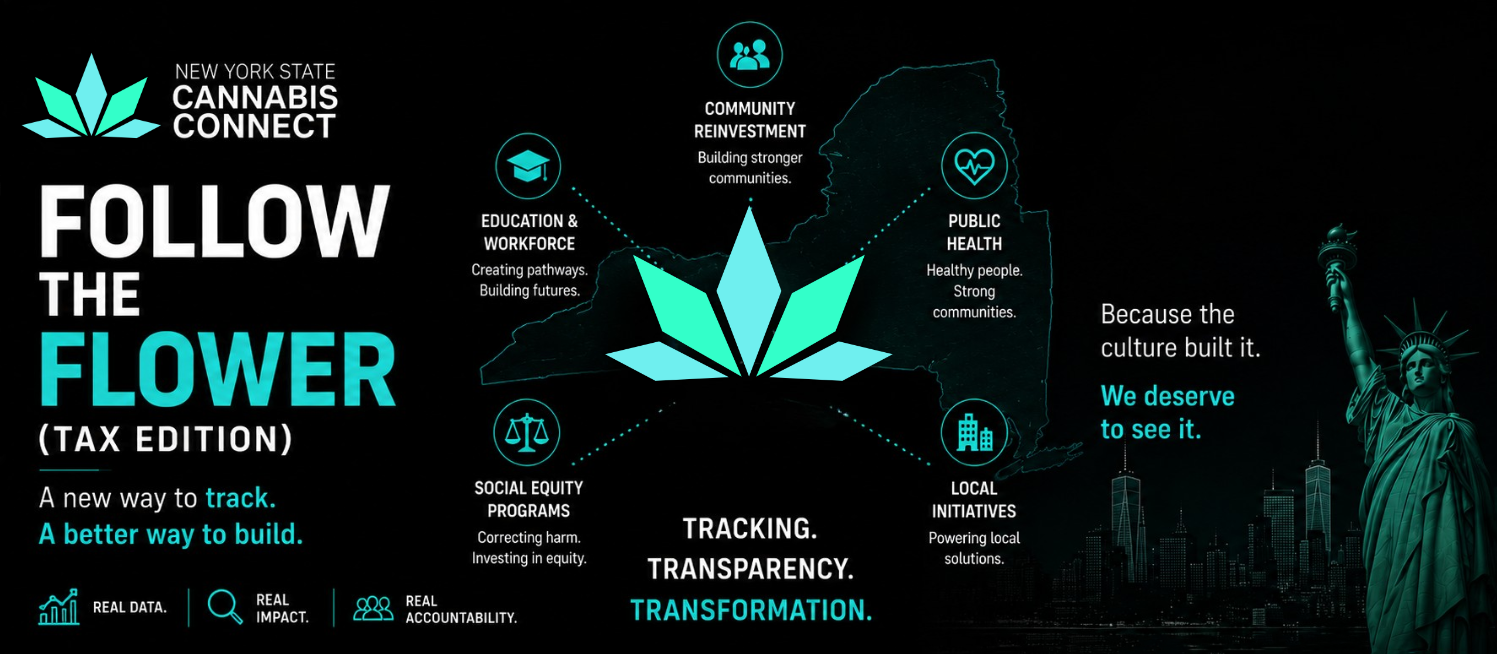
The New York State Cannabis Tax Tracker was created to help answer that question. Explore the tracker to see how cannabis tax revenue is being collected and distributed across New York State.
Built by New York State Cannabis Connect (NYSCC), the tracker is a public tool designed to provide a clear and accessible view of cannabis tax revenue and distributions across New York State. At its core, the project is about transparency. Consumers, business owners, workforce organizations, community leaders, policymakers, and taxpayers all deserve access to information about how cannabis-generated revenue is being collected and distributed.
The idea emerged from conversations taking place across New York's cannabis ecosystem. During coalition meetings, industry stakeholders and community advocates repeatedly raised the same concern: while cannabis tax revenue was growing, there was no simple way for the public to understand where those dollars were flowing. The Cannabis Tax Tracker was developed to close that information gap and provide a centralized source of data that anyone can access.
Transparency is particularly important because New York's cannabis law was built around equity and reinvestment. Under the Marihuana Regulation and Taxation Act (MRTA), cannabis tax revenue is intended to support education, treatment and public health initiatives, and community reinvestment efforts in areas disproportionately impacted by cannabis prohibition. The law was designed to ensure legalization would benefit more than just businesses—it would create meaningful public value for communities across the state.
Assembly Majority Leader Crystal Peoples-Stokes, the lead sponsor of the MRTA, has consistently emphasized the importance of ensuring resources reach the communities most impacted by past cannabis enforcement policies. In a recent interview discussing community reinvestment, she stated, "We know the districts where the people live who were harmed by the war on drugs. We have the data."
That statement highlights why data matters.
The Cannabis Tax Tracker allows New Yorkers to see revenue distributions by region and understand how funds are being allocated throughout the state. However, this is only the beginning.
With adequate support and investment, the tracker can evolve into a much more powerful public accountability and planning tool.
Future enhancements could include county-level reporting, city and town-level distribution tracking, workforce investment analysis, community grant monitoring, and longitudinal reporting that measures how cannabis revenue is impacting local communities over time. Instead of simply knowing how much money was collected, stakeholders could begin to understand how those funds are being used and whether they are producing measurable outcomes.
For workforce development advocates, this level of transparency is especially valuable. Cannabis is creating jobs across cultivation, manufacturing, distribution, testing, retail, compliance, logistics, marketing, and ancillary services. Understanding where tax dollars are being invested can help workforce organizations align training programs with local needs, identify underserved regions, and support pathways into quality employment opportunities.
For communities, expanded data could help local leaders identify funding gaps and advocate for greater investment. Community organizations, municipalities, and residents would gain a clearer understanding of how cannabis revenue is supporting neighborhood development, youth programs, housing initiatives, public health services, and other community priorities.
For consumers, transparency strengthens trust in the legal market. New Yorkers who choose to purchase cannabis from licensed businesses are contributing tax dollars that support public programs and community investments. Providing visibility into those outcomes helps demonstrate the value of participating in the regulated market while reinforcing the importance of consumer protection and responsible regulation.
Wondering where those taxes appear on your purchase? The New York Office of Cannabis Management provides a helpful guide explaining how cannabis taxes are calculated on a retail receipt.
Most importantly, expanded tracking can strengthen New York's commitment to social and economic equity. Equity was never intended to be a talking point—it was intended to be measurable. By creating public visibility into how resources are distributed and invested, New York can better evaluate whether the goals of legalization are being achieved and where additional attention may be needed.
Today, anyone can explore the latest revenue collections, tax distributions, and industry growth through the Follow the Flower (Tax Edition) Tax Tracker, making it easier than ever to understand where New York's cannabis tax dollars are going.
The Cannabis Tax Tracker represents an important first step toward that vision.
But maintaining and expanding a public-facing data platform requires ongoing resources. Data collection, verification, analysis, reporting, visualization, and public education all require dedicated time and expertise. With the right partners and financial support, the tracker can continue to grow into a statewide resource that informs policy, supports workforce development, empowers communities, and promotes accountability.
The promise of cannabis legalization was never simply about revenue. It was about opportunity, equity, transparency, and community investment.
The Cannabis Tax Tracker helps ensure that New Yorkers can follow the dollars and understand whether that promise is being fulfilled.
NYS Cannabis Connect Staff
All of the recent cannabis news and resources, all in one place.


Related News
New York Built a Cannabis Market Without Building the Workforce to Sustain It
Apr 20, 2026
From Compton to the Capitol: Cultural Legitimacy, Regulation, and the Performance of Equity in the Cannabis Era
Oct 22, 2025
Tiffany Walters Joins the Green Standard Alliance Board: Strengthening Cannabis Consumer Advocacy in New York
Sep 26, 2025